
In the hyper-fast world of smartphone technology, looking six months ahead is considered long-term forecasting. Looking two years ahead? That’s virtually science fiction.
As we settle into 2026, the tech world is currently buzzing about the recently released OnePlus 14 series and starting to whisper about next year’s OnePlus 15. However, for the true enthusiasts and futurists among us, it’s never too early to start dreaming about what lies further over the horizon.
Today, we are taking a massive leap forward. We are bypassing the immediate future to speculate on a device that won’t hit shelves until likely 2028: The OnePlus 16 Pro.
The Release Date: When Will the Future Arrive?
Predicting the release date of the OnePlus 16 Pro requires analyzing the company’s established rhythm. OnePlus has settled into a very predictable annual cycle for its numbered flagship series.
For the past several generations, OnePlus has moved its launch window earlier in the year to compete aggressively with Samsung’s Galaxy S lineup. We’ve seen launches shift from the spring (March/April) into the deep winter (January/February).
Assuming OnePlus maintains this aggressive strategy to capture early-year market share, the timeline looks like this:
OnePlus 14 Series: Early 2026 (Current)
OnePlus 15 Series: Early 2027
OnePlus 16 Series: Early 2028
Our Prediction: We expect the OnePlus 16 Pro to be announced in China in December 2027 or January 2028, with a global launch following in February 2028.
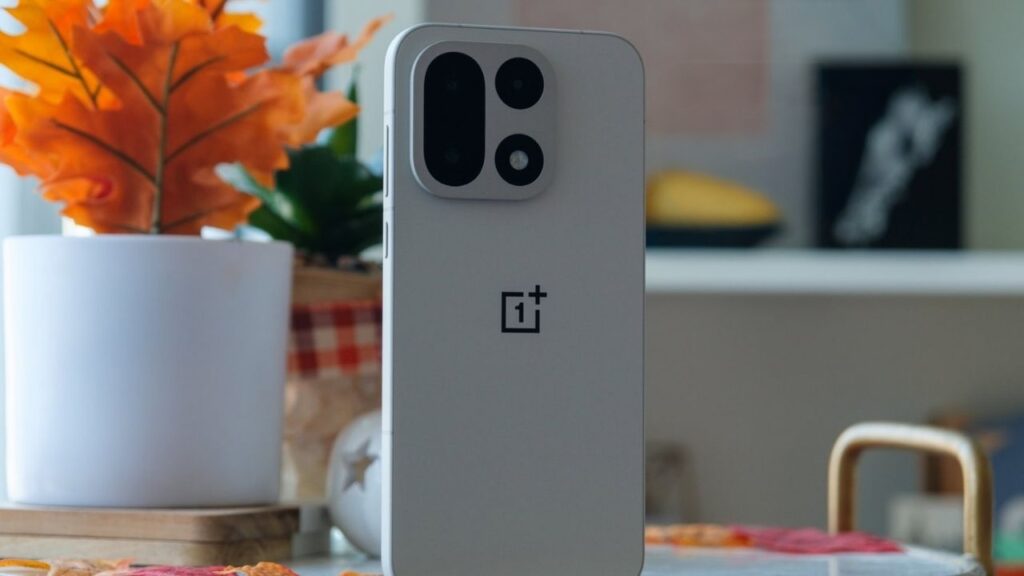
The Price: The Cost of Cutting-Edge
The days of OnePlus being the budget-friendly “flagship killer” are long gone. They are now a bona fide premium manufacturer competing toe-to-toe with Apple and Samsung.
Several factors will influence the pricing of smartphones in 2028:
Inflation and Component Costs: The cost of raw materials, shipping, and advanced chip manufacturing rarely goes down.
New Technology Integration: If the OnePlus 16 Pro introduces groundbreaking display tech or battery materials (discussed below), R&D costs will be passed to the consumer.
Market Positioning: OnePlus will price the 16 Pro slightly under the Samsung Galaxy S28 Ultra and the iPhone 19 Pro Max, but not by much.
Looking at the current trajectory where flagship Pro models hover around the $900-$1,000 mark, we must anticipate a creeping increase over two years.
Our Prediction: The OnePlus 16 Pro will likely start at $1,099 for the base model, potentially reaching $1,399 for top-tier storage configurations. It will be expensive, but likely justified by its feature set.
Design and Display: The Invisible Camera Era
By 2028, what will a smartphone even look like? We expect the OnePlus 16 Pro to refine the current “glass sandwich” design into something more seamless and durable.
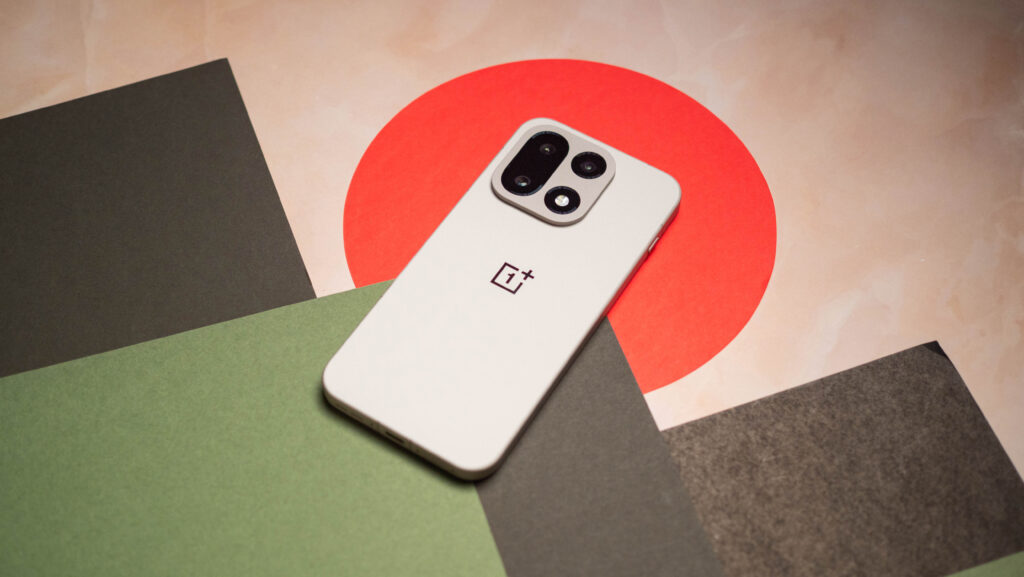
The True Full-Screen Experience
The biggest leap we anticipate by the OnePlus 16 Pro is the maturity of Under-Display Camera (UDC) technology. While available now, current iterations often sacrifice selfie quality or screen clarity above the lens. By 2028, UDC tech should be perfected. The OnePlus 16 Pro will likely feature a completely uninterrupted, edge-to-edge display with zero punch-holes or notches.
Materials and Durability
Following industry trends, titanium alloys will likely be standard for the frame, offering superior strength-to-weight ratios compared to aluminum. We also expect significant advancements in glass durability—perhaps a new generation of ceramic-shielding that makes cracked screens a rarity rather than a common occurrence.
The Display Panel
Expect a 6.8-inch LTPO OLED panel, but the brightness wars will have escalated. We could be looking at peak brightness levels exceeding 6,000 nits, making outdoor visibility flawless. The refresh rate will likely remain at a variable 1-120Hz, but with incredibly low latency for gaming.
Performance: The AI Powerhouse
By 2028, raw CPU speed won’t be the main talking point; it will be about Neural Processing Units (NPUs) and on-device AI.
The OnePlus 16 Pro will likely be powered by the Qualcomm Snapdragon 8 Gen 7 (or whatever naming scheme they adopt post-Gen 5).
On-Device AI
Currently, much of our mobile AI relies on the cloud. By the OnePlus 16 Pro, the phone itself will handle complex generative AI tasks instantly, without needing a data connection. This means real-time language translation that is flawless, instant video editing via voice prompts, and a personalized OS that anticipates your needs hours in advance.
RAM and Storage
To handle on-device AI models, RAM requirements will skyrocket. We predict 24GB of LPDDR6X RAM will be the standard base configuration, with storage options starting at 512GB and moving up to 2TB. UFS 5.0 storage speeds will make data transfer instantaneous.
Battery and Charging: The Solid-State Dream
This is the area ripe for the biggest revolution. Lithium-ion technology has plateaued. By 2028, we might finally see the commercialization of next-gen battery tech in consumer electronics.
Silicon-Carbon or Semi-Solid State?
We anticipate the OnePlus 16 Pro will utilize advanced silicon-carbon anode batteries, allowing for significantly higher density in the same physical footprint. A 6,000 mAh battery in a chassis thinner than today’s phones is entirely plausible.
There is also a slim chance we see early adoption of semi-solid-state batteries, which would drastically improve safety and longevity.
Charging Speeds
OnePlus has always led in charging. By 2028, wired charging could hit a stable 240W, taking the phone from 0% to 100% in under 8 minutes. Wireless charging will likely standardize around 100W.
The Long Wait
Talking about the OnePlus 16 Pro right now is an exercise in imagination. The tech landscape shifts rapidly, and what seems impossible today may be standard tomorrow.
However, based on the path OnePlus is carving out, the 16 Pro promises to be a device where AI integration is seamless, the screen is finally uninterrupted, and battery anxiety is a thing of the past. It will come with a high price tag, but it may well be the definitive device of the late 2020s.