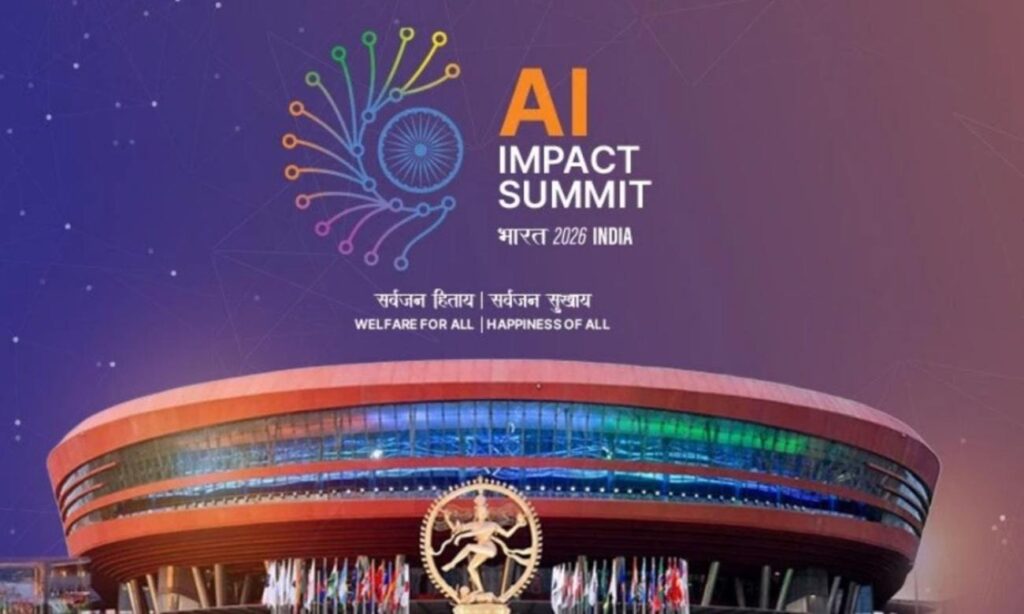
The India AI Impact Summit 2026, held at the iconic Bharat Mandapam in New Delhi, has emerged as a landmark event in the global technological landscape. Inaugurated by Prime Minister Narendra Modi on February 16, 2026, the five-day summit marks a historic milestone as the first major international AI gathering of this scale to be hosted in the Global South.
Guided by the theme “Sarvajana Hitaya, Sarvajana Sukhaya” (Welfare for All, Happiness for All), the summit underscores India’s ambition to bridge the digital divide and champion an artificial intelligence that serves humanity equitably.
The Vision: Ambition Coupled with Responsibility
In his opening address, Prime Minister Modi positioned India as a leader in the global AI transformation. He highlighted that India’s approach is rooted in Jan Bhagidari (People’s Participation), ensuring technology serves every citizen.
“Our strides in AI reflect both ambition and responsibility,” the Prime Minister stated, emphasizing that India is not just a consumer of AI but a primary architect of its future.
Central to this vision is the IndiaAI Mission, a government initiative backed by an investment of ₹10,372 crore. The mission has already achieved significant milestones, including:
- Shared Compute Access: Onboarding 38,000 GPUs to support startups and researchers.
- Indigenous Innovation: Development of 12 indigenous foundation models tailored to India’s 22 official languages.
- Sovereign Tech Stack: A commitment to building independent AI infrastructure that remains open to global collaboration while protecting national data interests.
A Global Convergence of Power and Innovation
The summit has drawn unprecedented international participation, featuring leaders from over 45 countries and industry titans from Silicon Valley. High-profile attendees include:
- Political Leaders: French President Emmanuel Macron, Brazilian President Luiz Inácio Lula da Silva, and UN Secretary-General António Guterres.
- Tech Visionaries: Sam Altman (CEO, OpenAI), who described India as a potential “full-stack AI leader,” and Sundar Pichai (CEO, Google).
- Delegations: A massive US delegation with over 120 senior executives from firms like Microsoft, IBM, Adobe, and Zoom.
Altman noted that India is now OpenAI’s second-largest user base globally, with 100 million weekly active users of ChatGPT. This highlights the massive scale at which India is adopting and influencing frontier technologies.
The Three Sutras: People, Planet, and Progress
The summit’s agenda is structured around three foundational pillars, known as Sutras, which translate into action through seven Chakras (focused domains):
1. People
This pillar focuses on inclusion, talent development, and job creation. Initiatives like YUVAi (Global Youth Challenge) and AI by HER are being showcased to empower women and youth with AI skills, ensuring that the workforce is prepared for an AI-augmented future rather than displaced by it.
2. Planet
The Planet Sutra explores how AI can be harnessed for climate action, sustainable agriculture, and resource management. It promotes “Responsible Intelligence” that reduces the environmental footprint of technology while accelerating climate resilience.
3. Progress
Aims at economic growth through the deployment of AI in healthcare, education, and public services. Discussions center on how AI can boost productivity and foster social development across emerging markets.
The India AI Impact Expo
Running alongside the summit is a sprawling 70,000-square-meter expo showcasing real-world applications of technology.
- Global Participation: Features 13 country pavilions, including Japan, the UK, Germany, and Australia.
- Startup Ecosystem: Over 600 high-potential startups are demonstrating solutions ranging from precision farming to AI-driven diagnostic tools for rural healthcare.
- Scale: With an expected footfall of 2.5 lakh visitors, the expo highlights India’s “AI for All” philosophy in action.
Governance, Safety, and Ethical Frameworks
As the fourth in a series of global AI summits (following the UK, South Korea, and France), the New Delhi gathering places a heavy emphasis on Safe and Trusted AI.
The summit is expected to produce the “Delhi Declaration,” a roadmap for global AI governance that focuses on:
- Preventing Real-World Harm: Establishing guardrails for deepfakes and misinformation.
- Democratic Access: Ensuring that compute power and data resources are not concentrated in the hands of a few nations.
- Transparency: Building interoperable governance mechanisms that allow all countries to participate in AI oversight.
The security at Bharat Mandapam itself serves as a case study; the Delhi Police are utilizing AI-assisted security systems, including 350 AI-enabled cameras and anti-drone technology, to manage the high-profile event.
Bridging the Global Divide
One of the most critical discussions at the summit is the disparity in AI adoption between the Global North and South. By advocating for “AI Commons,” India is positioning itself as a bridge, ensuring that technological advancements are shared broadly.
UK Deputy Prime Minister David Lammy described the summit as an “important moment” to unlock AI’s potential while “baking in robust and fair safety standards.” This sentiment is echoed across the board as participants seek a balance between rapid innovation and ethical safeguards.
Conclusion
The India AI Impact Summit 2026 is more than just a tech conference; it is a diplomatic and economic statement. By hosting the world’s most influential leaders, India has solidified its role as a “Vishwa Bandhu” (Global Friend) in the digital age.
As the summit continues, the focus remains on turning high-level discourse into actionable policies. With its vast data reserves, young talent pool, and robust digital public infrastructure, India is ensuring that the AI revolution is not just powerful, but also equitable and inclusive for every nation.