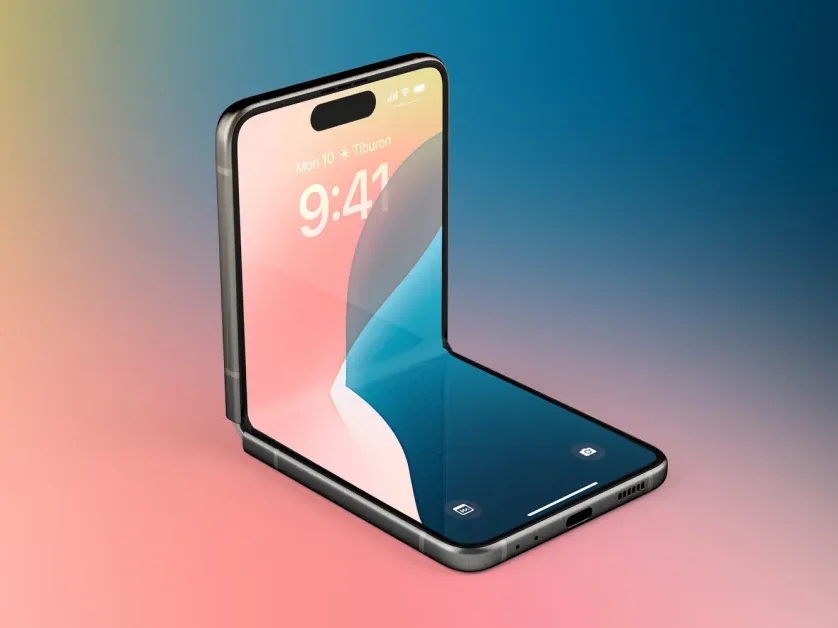
For years, Apple has remained on the sidelines of the foldable smartphone revolution, watching as Samsung, Google, and Motorola refined their flexible displays. However, new industry reports and insider leaks from early 2026 suggest that the wait is nearly over. Apple is reportedly planning a dual-pronged attack on the foldable market, starting with a premium “book-style” device, followed by a compact “clamshell” version.
The 2026 Debut: The “iPhone Fold”
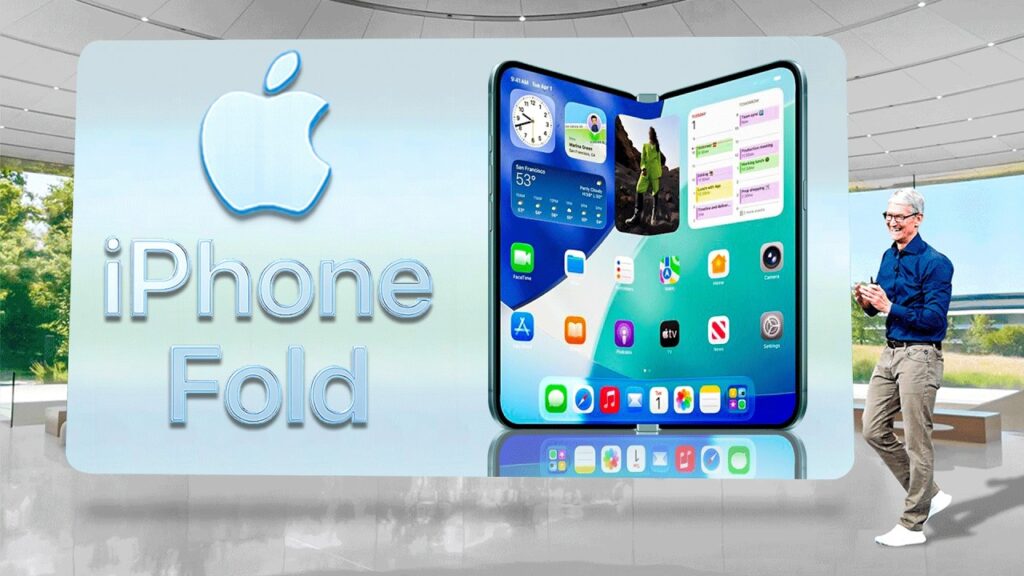
Apple is expected to make its grand entry into the foldable space in the second half of 2026. This flagship device, tentatively dubbed the iPhone Fold, is being positioned as a “halo” product—a ultra-premium device meant to sit at the very top of the iPhone lineup.
Expected Specifications:
- Design: A book-style horizontal fold, similar to the Samsung Galaxy Z Fold series.
- Displays: A 5.3-inch to 5.5-inch outer cover screen and a massive 7.8-inch internal folding display.
- Performance: Powered by the A20 Pro chip, likely the first to be built on a cutting-edge 2nm process.
- Camera: A dual-camera system featuring 48MP primary and ultra-wide sensors.
- Price: Rumored to start around $2,400 (approx. ₹2,15,000), making it one of the most expensive consumer smartphones ever released.
The “iPhone Flip”: A More Compact Future
While the book-style foldable will arrive first, Bloomberg’s Mark Gurman reports that Apple is already deep in development on a second form factor: a square, clamshell-style foldable often referred to as the iPhone Flip.
Designed to compete directly with the Samsung Galaxy Z Flip and Motorola Razr, this version would fold vertically into a compact square. While prototypes are currently being tested in Apple’s labs, this device is reportedly “far from guaranteed” for an immediate release, with most analysts eyeing a 2027 or 2028 launch window.
Solving the “Crease” Problem
One reason for Apple’s delay has been its perfectionist approach to display durability and aesthetics. Reports suggest that Apple’s foldable will feature a “minimal creasing” design. By utilizing advanced hinge mechanisms and potentially “liquid metal” materials, Apple aims to offer a flatter, more seamless internal surface than current competitors.
Security and Software Shifts
Interestingly, Apple may pivot away from Face ID for its first foldable. Due to the thinness of the device when unfolded, rumors suggest Apple will integrate Touch ID into the power button, similar to the iPad Air and iPad mini.
The software experience is also expected to be a major selling point. Apple is reportedly working on a specialized version of iOS that uses AI-powered shortcuts and a unique cover-display interface to provide “glanceable” information without needing to open the device.
The Foldable iPad: Still on the Horizon?
While the focus has shifted to the iPhone, Apple’s work on a foldable iPad continues in the background. However, that project has reportedly hit more significant development snags regarding the massive screen size and hinge tension, leading Apple to prioritize the iPhone Fold as its first entry into the category.