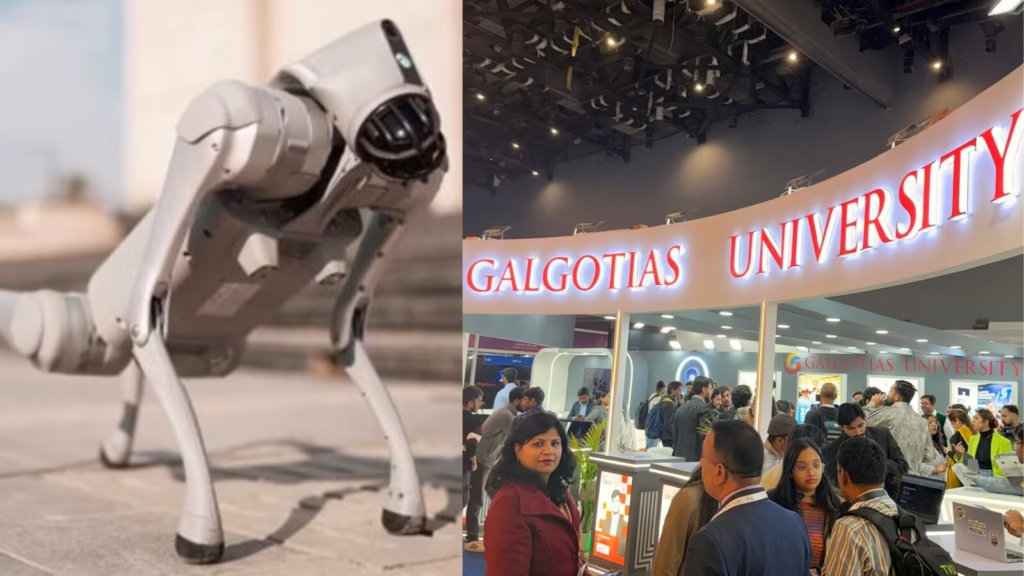
In the world of technology, there is a fine line between “inspired innovation” and “misleading marketing.” Galgotias University found itself on the wrong side of that line this week during the high-profile India AI Impact Summit 2026 at Bharat Mandapam.
What was meant to be a showcase of India’s growing AI prowess turned into a viral PR nightmare for the Greater Noida-based institution. Here is the full breakdown of the controversy that has taken the internet by storm.
The “Orion” Robodog: A Made-in-China Surprise
The trouble began when Galgotias University showcased a quadruped robot named “Orion.” In a video interview with DD News, Professor Neha Singh claimed that the robot was “developed by the Center of Excellence” at the university, as part of a massive ₹350 crore investment in AI.
The Reality Check: Tech enthusiasts on social media (X/Twitter) were quick to identify “Orion” as the Unitree Go2, a commercially available robot manufactured by the Chinese firm Unitree Robotics. These robots can be purchased online for approximately ₹2–3 lakh. Passing off a retail Chinese product as an “in-house innovation” at a summit inaugurated by PM Modi sparked immediate outrage.
The Soccer Drone Twist: “Atmanir-buy” or Atmanirbhar?
As the robodog video went viral, a second controversy emerged. The university had also showcased a “soccer drone,” claiming it was built from scratch on campus.
However, observers pointed out that the device bore a striking resemblance to the Striker V3 ARF, a professional drone soccer set from South Korea’s Helsel Group. The Congress party took sharp jabs at the university and the government, coining the term “Atmanir-buy” to mock the lack of original innovation.
The Consequences: Kicked Out and Power Cut
The Ministry of Electronics and Information Technology (MeitY) acted swiftly. To maintain the integrity of the summit, officials asked Galgotias University to vacate its stall immediately. * The Fallout: Reports surfaced that the power to the university’s pavilion was cut off before they were escorted out.
- Official Stance: IT Secretary S. Krishnan stated that the government would not tolerate exhibits that mislead the public or the international community by claiming ownership of others’ technology.
The University’s Defense: “Lost in Translation?”
Galgotias University has since issued a formal apology, though their defense has shifted multiple times:
- The “Ill-Informed” Representative: The university blamed the controversy on an “ill-informed” representative (Professor Neha Singh), stating she was “not authorized” to speak to the press and was over-enthusiastic on camera.
- The “Educational Tool” Argument: In an official statement, the university claimed they never intended to say they manufactured the hardware. Instead, they argued the robots were “classrooms in motion” used to teach students AI programming.
- Propaganda Allegations: The university also labeled the backlash a “propaganda campaign,” insisting that sourcing global tech for student learning is a standard practice.
Why This Matters for the Indian Tech Scene
This incident highlights a growing concern in India’s education sector: the pressure to appear “cutting-edge” sometimes leads to ethical shortcuts. While using global tools like Unitree or Helsel for research is standard practice, claiming them as original indigenous innovations undermines the hard work of genuine Indian startups and researchers.
Key Takeaways for Students and Techies:
- Transparency is Key: Using imported hardware is fine; claiming it as “developed in-house” is not.
- Digital Literacy: In the age of viral videos and hawk-eyed social media users, false claims are debunked in minutes.
- The Future of AI in India: Despite this setback, the AI Summit showcased incredible actual Indian innovations that shouldn’t be overshadowed by one university’s mistake.