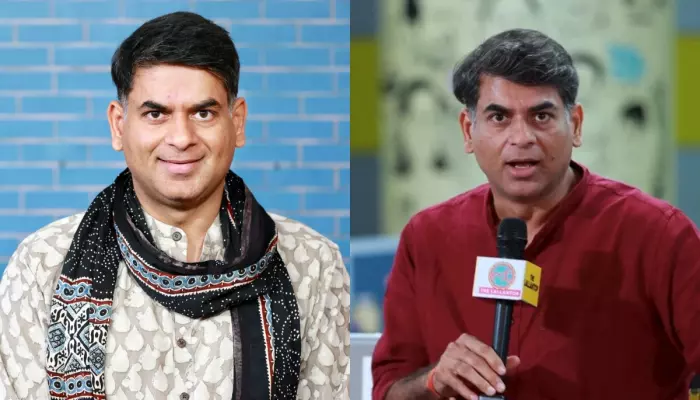
when the news broke that Saurabh Dwivedi was stepping down as the Editor of The Lallantop, it didn’t just feel like an organizational shift within the India Today Group. For millions of Hindi-speaking millennials and Gen-Z viewers, it felt like the end of a chapter.
For over a decade, Dwivedi wasn’t just an anchor; he was the “Bade Bhai” (big brother) of digital news. In an era where TV news was becoming synonymous with shouting matches and noise, Saurabh Dwivedi carved out a quiet, intelligent, and fiercely vernacular space on YouTube.
Here is how he didn’t just adapt to digital media—he fundamentally changed the DNA of political journalism in India.
The Death of “Studio Hindi” and the Rise of “Sadak Chhap” Intellect
Before The Lallantop, Hindi news anchors often spoke in a Sanskritized, formal dialect that felt distant from the streets of Lucknow, Patna, or Jaipur.
Saurabh Dwivedi flipped the script. He brought Khadi Boli—the conversational, rough-around-the-edges Hindi actually spoken by people—into the newsroom. He proved that you could quote sophisticated Urdu poetry (Sher-o-shayari) in one breath and use words like “Baukaal” or “Lallantop” (meaning ‘fantastic’ in local slang) in the next.
The Impact: He made political analysis accessible. He took the “elite” sheen off journalism and made it sound like a conversation at a tea stall, without dumbing down the content.
“Neta Nagri”: Making Politics Analytical, Not Aggressive
If you turn on primetime TV news, you see aggression. If you clicked on Dwivedi’s weekly show, Neta Nagri, you saw analysis.
Dwivedi reintroduced the art of the long-form political explainer. Instead of 2-minute soundbites, he produced hour-long deep dives into the history of political parties, caste equations in specific constituencies, and the intricate chess moves of coalition governments.
- The Shift: He respected the audience’s attention span. He bet on the fact that the youth did care about the nuances of politics, provided it was explained clearly and without bias. The millions of views on these long videos proved him right.
The “Guest in the Newsroom” Format
Traditional interviews are often scripted or hostile. Dwivedi’s Guest in the Newsroom became a cultural phenomenon because it was disarmingly casual.
Whether interviewing a Chief Minister or a Bollywood star, the vibe was intimate. This allowed him to ask the toughest questions—about unemployment, riots, or policy failures—with a smile, often catching seasoned politicians off guard more effectively than a screaming anchor ever could. He turned the political interview into a character study.
Digital First: Legitimizing YouTube Journalism
In 2016, “Digital News” was often dismissed as the dumping ground for failed TV clips or clickbait. Saurabh Dwivedi and his team legitimized the medium.
- Ground Zero Reporting: During elections (be it UP, Bihar, or Gujarat), Dwivedi didn’t sit in a Delhi studio. He walked the streets with a mic, talking to everyone from rickshaw pullers to first-time voters.
- The Methodology: His team showed that a YouTube channel could have better on-ground networks and fact-checking mechanisms than legacy TV channels.
Democratizing “The Lutyens” Information
Perhaps his biggest contribution was breaking the information monopoly of the Delhi elite (often called the Lutyens’ media). Dwivedi, with his background from JNU and his roots in Orai (UP), acted as a bridge.
He decoded complex Supreme Court judgments, new parliamentary bills, and economic policies for the Hindi heartland. He didn’t just tell people what happened; he explained why it mattered to them, often using metaphors and historical context that resonated with the common man.
The Road Ahead
With his resignation in January 2026, questions abound about where Saurabh Dwivedi will go next. But his legacy at The Lallantop is already cemented.
He taught a generation of journalists that you don’t need a suit and tie to be authoritative. You don’t need to shout to be heard. And most importantly, he taught us that in the noisy world of the internet, the most radical thing you can be is authentic.
Tera tujhko arpan (Yours is offered to you), Saurabh. The mic is yours, wherever you choose to plug it in next.