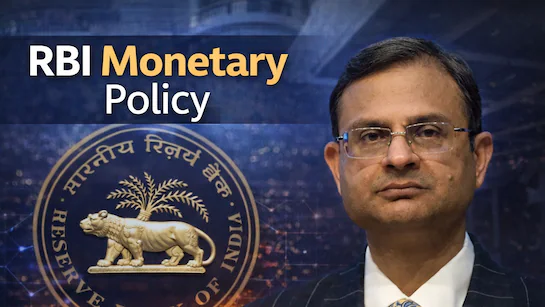
The Reserve Bank of India (RBI) concluded its first Monetary Policy Committee (MPC) meeting of 2026 with a decision that perfectly encapsulates the “art of the pivot.” Under the leadership of Governor Sanjay Malhotra, the central bank opted to maintain the benchmark repo rate at 5.25%, signaling a strategic pause after a year characterized by aggressive easing.
The Rationale Behind the 5.25% Hold
The journey to the current 5.25% rate has been a rapid one. Over the course of 2025, the RBI slashed rates by a cumulative 125 basis points, responding to a significant cooling of global inflationary pressures and a need to stimulate domestic private investment. However, the February 2026 policy marks a shift from “action” to “observation.”
The primary reason for the pause is monetary transmission. While the RBI lowers the repo rate, it takes time for commercial banks to pass those benefits on to home loan and corporate borrowers. By holding steady, the MPC is allowing the previous cuts to fully filter through the veins of the economy. Governor Malhotra noted that the committee’s stance remains “neutral,” providing the flexibility to move in either direction depending on how the global geopolitical landscape evolves.
A Growth Story Upgraded
If the rate hold was the “steady” part of the announcement, the GDP forecast was the “spectacular” part. The RBI has revised its real GDP growth projection for FY26 upward to 7.4%, a notch higher than the previous 7.3%.
This optimism is rooted in a “perfect storm” of positive domestic factors:
- The Trade Catalyst: Recent Free Trade Agreements (FTAs) with the European Union and the United Kingdom have begun to show tangible results in the manufacturing sector.
- Rural Resurgence: High reservoir levels and a bumper rabi crop have increased disposable income in rural India, which is essential for sustained FMCG and two-wheeler demand.
- Infrastructure Momentum: The Union Budget’s continued emphasis on capital expenditure has created a multiplier effect, encouraging private players to restart long-dormant projects.
For the first half of the next fiscal year (FY27), the RBI is even more bullish, projecting growth at 7.0% for Q2. This places India as the fastest-growing major economy globally, far outstripping its peers.
The Inflation “Base Effect” Warning
While the growth numbers are celebratory, the RBI remains a “vigilant hawk” regarding prices. Headline CPI inflation has been remarkably low, hovering around 2.1% in late 2025. However, the MPC warned that this is largely due to a favorable “base effect”—comparing today’s prices to a high-price period last year.
As we move into FY27, the RBI projects inflation to rise toward 4.0% in Q1 and 4.2% in Q2. While this is still well within the 2-6% comfort zone, it explains why the bank isn’t ready to cut rates further just yet. The central bank is particularly wary of “imported inflation” stemming from volatile precious metal prices and potential supply chain disruptions in the Middle East.
A New Era of Consumer Empowerment
Perhaps the most groundbreaking aspect of this policy wasn’t the numbers, but the regulatory reforms. In a move that directly impacts millions of Indians, the RBI announced a landmark proposal to compensate customers for digital fraud.
- The MSME Credit Boost: In a massive win for small businesses, the limit for collateral-free loans to MSMEs has been doubled from ₹10 lakh to ₹20 lakh. This move addresses the “credit gap” that has historically stifled the growth of micro-entrepreneurs.
- Real Estate Liquidity: By allowing banks to lend to Real Estate Investment Trusts (REITs), the RBI has opened a new spigot of capital for the commercial real estate sector. This move is expected to bring institutional-grade transparency and lower funding costs to the infrastructure space.
Market Dynamics and Liquidity
The banking system is currently swimming in liquidity, with a surplus of nearly ₹70,000 crore. While this is generally good for lending, the RBI signaled that it will use Variable Reverse Repo (VRR) auctions to ensure that this excess cash doesn’t fuel speculative bubbles.
Furthermore, the introduction of Corporate Bond Index Derivatives marks a coming-of-age for India’s debt markets. By allowing investors to hedge risks more effectively, the RBI is paving the way for a deeper, more mature bond market that can fund India’s ambitious $7 trillion economy goal.
Conclusion
The February 2026 MPC meeting will be remembered as the moment the RBI transitioned from “crisis management” to “precision engineering.” By maintaining the repo rate at 5.25%, the central bank has provided a stable environment for businesses to plan their investments without the fear of sudden volatility.
For the common man, the message is clear: the economy is on a high-growth path, your digital transactions are becoming safer, and the cost of borrowing has likely bottomed out. As we look toward the April policy, the focus will shift to how the global economy reacts to a changing trade environment. For now, India remains a “bright spot,” steered by a central bank that values stability as much as it values growth.